Are Industrial Ethernet Cables Suitable for Long – Distance Transmissions? Industrial Ethernet Cable
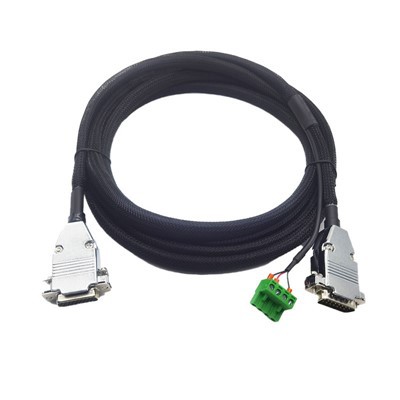
As an established supplier in the industrial Ethernet cable domain, I’m often confronted with a pivotal question from clients and industry enthusiasts alike: "Are industrial Ethernet cables suitable for long – distance transmissions?" This query is not just a simple yes or no; it delves deep into the technicalities of cable design, signal propagation, and the demands of modern industrial applications.
Understanding Industrial Ethernet Cables
Industrial Ethernet cables are engineered to meet the rigorous requirements of industrial environments. Unlike their commercial counterparts, they are built to withstand harsh conditions such as extreme temperatures, vibrations, electromagnetic interference (EMI), and chemical exposure. These cables typically use high – quality conductors, robust insulation materials, and shielding techniques to ensure reliable data transmission.
The most common types of industrial Ethernet cables include Category 5e (Cat5e), Category 6 (Cat6), and Category 6A (Cat6A). Cat5e cables are capable of supporting data rates of up to 1 Gigabit per second (Gbps) and are suitable for shorter distances. Cat6 cables can handle up to 10 Gbps and have improved performance in terms of crosstalk and attenuation compared to Cat5e. Cat6A cables, on the other hand, are designed for 10 – Gigabit Ethernet over longer distances and offer even better shielding and performance characteristics.
The Science of Signal Transmission
When it comes to long – distance transmissions, the behavior of electrical signals within the cable is of utmost importance. As a signal travels through a cable, it experiences attenuation, which is the loss of signal strength over distance. This is mainly due to the resistance of the conductor and the dielectric properties of the insulation material. Additionally, crosstalk can occur, where signals from adjacent cable pairs interfere with each other, degrading the signal quality.
The speed at which a signal can be transmitted over a cable is also a limiting factor for long – distance applications. Higher data rates require more bandwidth, and the cable’s ability to carry high – frequency signals without significant loss becomes crucial. For example, a 10 – Gigabit Ethernet signal has a much higher frequency content compared to a 1 – Gigabit Ethernet signal, and thus, it is more susceptible to attenuation and interference.
Factors Affecting Long – Distance Suitability
Cable Type and Quality
As mentioned earlier, different categories of industrial Ethernet cables have different performance capabilities. For relatively short distances (up to 100 meters), Cat5e and Cat6 cables are commonly used. However, for longer distances, Cat6A cables are often preferred. The quality of the cable also plays a significant role. A high – quality cable with better conductors and insulation materials will have lower attenuation and crosstalk, allowing for more reliable long – distance transmissions.
Signal Boosters and Repeaters
In cases where the distance exceeds the cable’s natural transmission limit, signal boosters and repeaters can be used. Signal boosters amplify the signal to compensate for attenuation, while repeaters regenerate the signal, effectively restoring its original quality. These devices can extend the reach of industrial Ethernet cables significantly. However, they also add complexity and cost to the network.
Environmental Conditions
Industrial environments can be extremely challenging for cable performance. Extreme temperatures can cause the cable materials to expand or contract, affecting the electrical properties of the cable. EMI from nearby electrical equipment can induce noise in the cable, interfering with the data signal. Moisture and chemical exposure can also damage the cable over time. To ensure long – distance transmissions in these conditions, cables with proper environmental ratings and shielding are essential.
Applications and Their Requirements
Factory Automation
In factory automation, long – distance data communication is required between various control systems, sensors, and actuators. For example, in a large – scale manufacturing plant, sensors located at different stages of the production line need to send data to a central control unit. Industrial Ethernet cables are used to connect these devices, and the ability to transmit data over long distances without loss is crucial for real – time monitoring and control.
Smart Grid
The smart grid is another area where long – distance industrial Ethernet cable transmissions are essential. In a power distribution network, data needs to be transmitted between substations, power generation plants, and control centers. These transmissions can cover distances of several kilometers, and the reliability of the data is vital for grid stability and efficient power management.
Transportation and Infrastructure
In transportation systems such as railways and airports, industrial Ethernet cables are used for communication between various control systems, surveillance cameras, and passenger information systems. Long – distance transmissions are required to ensure seamless operation of these complex systems.
Case Studies
Factory Floor Expansion
A large automotive manufacturing plant decided to expand its production floor by adding new assembly lines. The new lines were located at a considerable distance from the existing control room. The plant initially considered using wireless communication but found that it was unreliable due to interference from metal machinery. Instead, they opted for Cat6A industrial Ethernet cables. By installing signal repeaters at strategic intervals, they were able to achieve seamless data transmission between the new assembly lines and the control room, ensuring smooth production operations.
Smart Grid Implementation
A utility company was implementing a smart grid project across a large rural area. To connect the remote substations to the central control center, they used Cat6A industrial Ethernet cables with high – grade shielding to protect against EMI from power lines. They also installed signal boosters to compensate for the long distances. As a result, the company was able to collect real – time data on power consumption, voltage levels, and fault detection, improving the overall efficiency and reliability of the grid.
Conclusion
Industrial Ethernet cables can be suitable for long – distance transmissions, but it depends on several factors. By choosing the right cable type, implementing signal boosting and repeating technologies, and considering the environmental conditions, reliable long – distance data transmission can be achieved.
In today’s industrial landscape, where seamless communication is essential for efficient operations, the reliable performance of industrial Ethernet cables in long – distance applications cannot be overstated. As a supplier, I’m committed to providing high – quality cables and solutions that meet the diverse needs of my clients.

If you’re in the market for industrial Ethernet cables for your long – distance transmission needs, I encourage you to reach out. Our team of experts can help you select the most suitable cable type, provide guidance on installation, and offer any necessary support. Let’s work together to ensure your industrial network operates at its best.
USB Cable References
- "Industrial Ethernet Handbook" by Bernd G. Liptak
- "Data and Computer Communications" by Andrew S. Tanenbaum
- Technical papers from leading cable manufacturers on industrial Ethernet cable performance and long – distance applications.
Karobert Technology LLC Karobert Trading PTE. LTD.
We’re known as one of the most professional industrial ethernet cable manufacturers and suppliers in China, also support customized service. Please feel free to buy high quality industrial ethernet cable made in China here from our factory. For price consultation, contact us.
Address: 6250 S 196th St, Kent, WA, 98055, USA.
E-mail: karl@karobert-us.com
WebSite: https://www.karobert-us.com/
