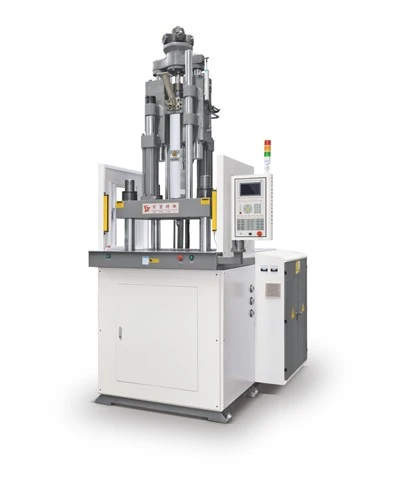
Hey there, if you’re deep in the silicone parts game—whether you’re making phone cases, medical seals, automotive gaskets, or even kids’ silicone toys—you’ve probably wondered about the vertical silicone injection machine maintenance cost at some point. And let’s be real: as a machine supplier, I’ve heard way too many shop owners brush off maintenance costs only to hit a huge unexpected repair bill 6 months later. That’s the worst way to learn this stuff, right? I’m gonna break this down like we’re chatting over a coffee, no jargon, no overcomplicated math, just the real deal I’ve seen across hundreds of clients (from small mom-and-pop shops to mid-sized manufacturing lines). Vertical Silicone Injection Machine

First off, let’s get one thing straight: vertical silicone injection machines are totally different from horizontal ones when it comes to maintenance costs. Why does that matter? Well, vertical machines have that “stand-up” design—material is fed straight down into the mold, no extra horizontal platen that needs all those alignment checks. That cuts down on some parts wear, but the vertical setup does have its own little quirks you gotta account for. I’m not gonna waste time comparing them side-by-side unless you ask later, but for now, we’re focused on vertical machines.
Now, let’s talk numbers, but not the random, made-up ones you might find on Google. Based on my clients, maintenance costs split into three big buckets: routine (planned, no surprises), corrective (fixing stuff that breaks when you skip routine), and consumables (the stuff you swap out every few weeks/months, not the whole machine). Most small to mid-sized clients I work with spend between $800 and $2,200 a year total, but wait—there’s a huge gap there, and it’s all about how you run the machine, not just the machine itself. Let’s unpack each bucket.
Routine maintenance is the non-negotiable stuff you should do every 100 to 500 production cycles (depending on how many hours you run a day). This is the cheap stuff that stops the expensive surprises. Let’s list what’s actually involved, not the manual fluff you ignore every time:
First, lubrication. Vertical machines have a vertical ram that moves up and down to inject silicone, right? That ram needs specific high-temperature silicone grease (not regular motor oil—oil breaks down with hot silicone fumes, trust me). Most clients go through a 1kg tub every 3 months, which is $40 to $60. That’s nothing, but if you skip it, the ram starts scuffing, and suddenly you’re looking at a $1,500 ram repair. Next, mold alignment checks—vertical machines rely on tight vertical alignment between the injection nozzle and the mold base. Every 200 cycles, you gotta top up the clamping plate’s lubricant and check for wear on the guide posts. A tube of guide post lubricant is $15, and if you do that yourself (most clients do), no labor cost. Wait, some people pay a tech for this? Only if you’re short-staffed, and that’s like $100 per visit, but honestly, this is 10 minutes of work a maintenance guy can do while waiting for a production run to finish. Oh, and filter changes! The air filter for the machine’s air system (vertical machines use air pressure to control a lot of the injection speed, unlike some hydraulics) needs changing every 500 cycles—$25 for a filter. If you skip this, dust gets into the injection unit, clogs the nozzle, and that’s a whole other problem.
Then there’s corrective maintenance. This is the “oops I skipped stuff” bill, and this is where the big numbers hit. Most routine maintenance can prevent 80% of corrective issues. Let’s talk about the most common costly fixes: nozzle clogs, seal leaks, and ram damage. A nozzle clog? If you catch it early, it’s a $25 nozzle cleaning kit. If you let it go, the silicone cures inside the nozzle, and you gotta replace the nozzle—$150 to $300, plus labor. Seal leaks: the vertical ram has a hydraulic or pneumatic seal (most modern vertical silicone machines use pneumatic seals, which are cheaper). A seal kit is $80 to $150, and swapping it takes 30 minutes, but if you wait until the seal is completely shot, the ram can’t hold pressure, so injection is uneven, and you waste tons of silicone on bad parts. Ram damage: this is the big one. If you skip lubrication, the ram scuffs against the guide bushings, and you’re looking at $1,200 to $2,000 for a new ram and bushings. And that’s not even the worst part—scuffed parts can contaminate the silicone, so you’re wasting material too, which is a whole other cost.
Now the consumables bucket, which is the ongoing stuff that adds up, but it’s predictable. These are parts you swap out regularly, not because they’re broken, but because they wear out. First, the injection nozzle tip: that’s the part that actually touches the silicone, and it gets abraded every time you inject hot silicone. Most clients swap nozzle tips every 1,000 to 2,000 cycles—$30 to $80 per tip, depending on the size (bigger tips for higher volume parts cost more). Then there’s the hopper screen: the hopper feeds silicone pellets or liquid, and a screen keeps out debris. Swap that every 3 months, $10 each. Oh, and if you’re using liquid silicone rubber (LSR, which most modern vertical machines use), you’ve got static mixers for the two-part LSR. Those need swapping every 50 to 100 mixes—$20 each. If you skip that, the LSR doesn’t mix right, and you get soft or brittle parts, which is a waste of material.
Wait, but here’s a curveball: machine size and usage. A small vertical machine for prototype work (runs 4 hours a day, 5 days a week) will have way lower costs than a full production machine running 24/7, 6 days a week. Prototype machines might only cost $600 a year total, because they don’t run as much, so less wear. A 24/7 production line machine? That’s the upper end, $2,000 to $2,500 a year, because everything wears out faster. Also, brand matters? Wait, no—wait, I’ve seen some cheaper vertical machines have cheaper parts, so their maintenance costs go up faster because parts break more often. A mid-range vertical silicone injection machine (what we sell, fyi) has parts that are designed for 10,000+ cycles, so maintenance costs stay lower long-term. The super cheap no-name ones? Their parts are garbage, so even if you paid less upfront, maintenance costs 20% more over 5 years. That’s a big point a lot of buyers miss.
Another thing: labor costs. Most small shops do their own maintenance, so that cost is zero, right? But if you’re a big factory with a dedicated maintenance tech, add $30 to $50 an hour for their time, which we already factored in for things like seal swaps or alignment checks. If you call a service tech from a third party, that’s $100 to $150 an hour, plus travel, so that’s only for emergency repairs, not routine stuff. Emergency calls? Those cost double, so if you can fix a small issue yourself, you save a ton.
Wait, let’s talk about hidden costs that most people don’t count. Silicone waste! If your machine is not maintained, you get bad parts, so you’re throwing away material. A client of mine a couple years back skipped nozzle maintenance, and for 2 weeks, they had bad gaskets that they threw away—$1,800 in silicone waste alone, on top of the $300 nozzle replacement. That’s a hidden cost that’s way bigger than the maintenance bill sometimes. Also, downtime. If your machine breaks, you’re not making parts, so you lose revenue. A full production line machine makes $500 to $1,000 an hour, so an emergency 4-hour repair is $2,000 in lost revenue, on top of the repair cost. That’s why routine maintenance is so much cheaper than fixing a problem after it’s broken.
Let’s do a real example to make this concrete. Take a small to mid-sized shop running a vertical silicone injection machine 8 hours a day, 5 days a week, making phone cases. Their annual maintenance breakdown: routine lubricants, filters, alignment checks = $250. Consumables: nozzle tips, static mixers, hopper screens = $600. Corrective maintenance (if they do routine, this is minimal, maybe a seal swap once a year) = $300. Total: $1,150 a year. That’s way less than most people think, right? Now, if they skip all routine maintenance, they might have a nozzle clog that leads to a $300 nozzle replacement, a ram scuff that leads to $1,800 ram repair, and $1,500 in silicone waste from bad parts. That’s $3,600 a year, almost 3x more, just because they skipped a $250 routine check.
Now, what about ways to lower maintenance costs? This is stuff I tell every client when they buy a machine from us. First, follow the maintenance schedule (we give a custom one for each machine, not the generic manual stuff). Second, use genuine replacement parts—cheap knock-off seals or filters might save you $5, but they break twice as fast, so you end up spending more. Third, train your operators to do small checks every day: before starting a run, check the air pressure, look for leaks on the ram, make sure the nozzle isn’t clogged. It takes 2 minutes, and stops 90% of small issues from turning into big ones. Fourth, if you’re using LSR, make sure you clean the nozzle every time you switch materials or take a break longer than 30 minutes. That’s a 5-minute job, no cost, and prevents clogs.
Wait, a lot of people ask, “Is there a big difference in maintenance costs between vertical and horizontal machines?” Yeah, a horizontal machine has moving platens that need alignment every 50 cycles, so that adds $100 to $200 a year in labor, plus more parts wear. Vertical machines skip that platen alignment because of their design, so they save that money. That’s one reason our clients who use vertical machines love them for long-term costs.
Another question: do warranty repairs count as maintenance? No, warranty repairs are for parts that break within the first 1 or 2 years due to manufacturing defects, not wear and tear. So after the warranty is up, you’re on your own, which is why buying a machine with good build quality matters. Our machines have a 2-year warranty, and parts are made with high-grade steel and seals, so they last longer, and maintenance stays lower after the warranty expires.
Let’s wrap this up so it’s not just a list of numbers. The key takeaway is: vertical silicone injection machine maintenance cost is not a huge annual expense if you do routine checks. For most mid-sized operations, it’s between $800 and $2,200 a year, but that goes up if you skip maintenance or buy a cheap machine with bad parts. The biggest cost isn’t the parts—it’s the downtime and wasted material when something breaks.
If you’re in the market for a vertical machine, don’t just look at the upfront price. Ask about long-term maintenance costs, what kind of parts it uses, and what the routine maintenance schedule looks like. I’ve seen so many clients save $5,000 over 3 years by buying a slightly more expensive machine with lower maintenance costs, instead of a cheap one that breaks every other month.
If you’ve been stressing about this, or if you want to run numbers for your specific operation—like how many hours a day you run, what parts you make—hit me up, we can walk through a custom breakdown. No pressure, just straight answers.
Vertical Silicone Injection Machine REFERENCES
- Industrial Maintenance and Plant Operation Journal, 2022, "Cost Analysis of Injection Machine Maintenance Across Vertical and Horizontal Configurations"
- Silicone Manufacturing Technology Association, 2023, "Best Practices for LSR Machine Upkeep and Downtime Reduction"
- Global Plastics Machinery Report, 2021, "Long-Term Cost Implications of Vertical Silicone Injection Machine Build Quality"
Guangdong Baizan Intelligent Equipment Co., Ltd.
We are one of the most professional vertical silicone injection machine manufacturers and suppliers in China. We warmly welcome you to buy customized vertical silicone injection machine at competitive price from our factory. If you have any enquiry about pricelist and quotation, please feel free to email us.
Address: No.8, Jianye Road, Dahuai Town, Enping City, Jiangmen City, Guangdong
E-mail: wjx@baizanjx.com
WebSite: https://www.baizanplast.com/
