Hey there, ever stood in an elevator and thought, “Wait, how does this thing not go flying off the rails or come crashing down mid-floor?” I’ve been in the elevator safety parts game for over a decade, and let me tell you—those unassuming little brake parts? They’re the unsung heroes keeping everyone chill (and alive) every time they step inside a cab. Today, I’m breaking down exactly what these parts do, why skimping on them is a bad idea, and why my team’s been supplying these to fitters and elevator pros across North America for years. Elevator Safety Parts
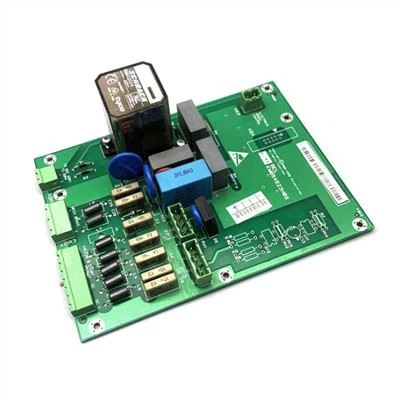
First off, let’s cut the jargon. When I say “elevator safety brake parts,” I’m not talking about some clunky old metal thing that slams to a stop. We’re talking about a whole system of smaller, specialized parts that work together—like a well-oiled group of baristas, minus the spilled oat milk. The main functions? Let’s start with the big one: emergency stopping. If the elevator’s going way too fast (like, “someone cut the power mid-ride” fast), the brake’s got to kick in before it hits the bottom and turns a 10-story ride into a horror movie. That’s where the primary safety brake comes in—usually mounted on the traction sheave, that big wheel that pulls the cab up and down. But wait, there’s also the secondary brake, or the governor brake, which triggers if the primary one acts up. These parts aren’t just “stop buttons”; they’re calibrated to slow the cab at a safe rate, not jerk everyone forward like a rollercoaster at Six Flags. I’ve seen what happens when these are worn out—last year, a fitter brought in a cab that’d had a failed brake part, and when they tested it, it shot down 3 floors before catching. Scary stuff, right?
Next up: holding the cab steady when it’s supposed to be still. You know that weird moment when you press a floor button and the elevator sits there, not moving an inch? That’s the brake holding function at work. Once the cab’s at the right height, the brake clamps down so it doesn’t drift—especially important if the power cuts out mid-pickup. I remember a call from a building manager in Chicago a couple years back; their building had a blackout, and an elevator was stuck between floors. When the power came back, the brake failed to hold, and the cab crept down an inch every minute, spooking the people inside. Turns out their holding brake springs were rusted, so they weren’t applying enough pressure. Our team swapped those parts in a day, and they haven’t had an issue since. That’s the thing—holding function is easy to overlook until it’s broken.
Wait, there’s another function that most people don’t talk about: preventing overspeed in the first place. The governor system, which is part of the brake assembly, monitors the elevator’s speed 100 times a second. If it hits a threshold (usually around 20% faster than the rated speed), the governor cable triggers the safety tongs—those little metal clamps that grip the guide rails on the sides of the shaft. I’ve had fitters ask me, “Why not just make the brake stop it all instead of adding tongs?” Because sometimes, the cab’s moving too fast for the brake to catch immediately. The tongs are a fail-safe—they dig into the guide rails (without damaging them, ideally) and bring the cab to a smooth stop. Last month, a technician out in Dallas had a case where the traction sheave slipped a little, making the cab speed up. The governor kicked in, the tongs worked, and no one got hurt. That’s the redundancy these brake parts provide—no single point of failure.
Now, let’s get real about what makes these parts work. They’re not one-size-fits-all, either. There are different brake parts for different types of elevators: traction elevators (the ones with the steel ropes, most common in mid-rise buildings), hydraulic elevators (for low-rise, like 3-4 floors), even dumbwaiters for restaurants. For traction ones, we supply brake shoes (the friction pads that press against the sheave), springs (that apply the clamping force—think of them like the muscles of the brake), and solenoids (the electrical triggers that release the brake when you press a floor button). For hydraulic, there’s a different set of parts, like the hold-down brake that stops the plunger from dropping when power’s off. I once messed up early in my career—supplied the wrong brake shoes to a small hydraulic lift in a hotel. They called me panicking because it wasn’t stopping at the ground floor. Turns out the shoes were too soft, so they wore out in a week. We swapped them for the correct hard-friction ones, and they’ve been good for 5 years now. Lesson learned: always match the parts to the elevator type.
Another key function: dissipating heat. When a brake clamps down fast, friction creates a ton of heat—like when you rub your hands together really hard. If that heat builds up too much, the brake could warp, or the friction material could melt, making it useless. That’s why high-quality brake parts have heat-resistant materials—ceramic friction lining, for example, instead of old-fashioned asbestos (which we stopped using decades ago, thank goodness). We test every batch of shoes we supply by running them through temperature checks up to 500°F—if they can’t handle that, they don’t leave our warehouse. I’ve had a competitor sell cheap shoes that melted during a rush stop; the fitter had to replace the whole brake assembly, which cost the building twice as much as if they’d bought our parts. So heat dissipation isn’t just a “nice to have”—it’s essential for long-term reliability.
Wait, let’s talk about maintenance, because that’s where these parts either shine or fail. A lot of building operators wait until the brake squeals or acts up to fix it, but that’s a mistake. The brake parts need regular checks: grease the springs, replace worn shoes, test the governor every 6 months. We recently put together a free guide for our customers that walks through basic brake checks—no fancy tools needed, just a screwdriver and a speed tester. The thing is, even the best brake parts will wear out if they’re not maintained. Last quarter, a customer told us they skipped maintenance for 2 years, and the brake’s solenoid got stuck because of dust buildup. They had to shut down the elevator for 3 days, which meant the office workers had to take stairs. Not fun for anyone. So our team always reminds clients: replace parts when they hit the wear limit (usually marked on the shoe), not when they break.
Now, let’s address a common myth. Some people think elevator brakes are just big metal clamps, but no—they’re a precision system. The tolerance on a brake shoe has to be within a fraction of a millimeter; if it’s off, the clamping force is wrong, and it won’t stop when it needs to. That’s why we work with machinists who specialize in elevator parts—no generic off-the-shelf stuff. We source our springs from a company that makes them for industrial brakes, and our friction lining is formulated specifically for elevator sheaves, not car brakes (which are way more powerful, but not calibrated for the slow, heavy mass of an elevator cab).
So why does all this matter to you? Whether you’re a building manager, elevator fitter, or even just someone who takes elevators every day, these brake parts are the reason you feel safe. I’ve been in the biz long enough to see how a small, $50 brake shoe can prevent a $50,000 repair or, worse, an accident. That’s why my team takes pride in supplying parts that don’t cut corners. We don’t do cheap imports that fall apart in a year; we do parts that are tested, calibrated, and built to last.
If you’re a fitter needing replacement brake parts, a building operator looking to upgrade your system, or even someone who just wants to know more about how these things work, hit us up for a chat. We can help you figure out exactly what parts you need, whether it’s for a 5-story residential elevator or a 20-story commercial one. No sales pitches, just real advice from people who’ve been in the trenches, seeing what works and what doesn’t.
At the end of the day, elevator safety isn’t about flashy technology—it’s about reliable, well-built brake parts that do their job when it counts. Next time you step into an elevator, take a second to appreciate those tiny (and not-so-tiny) parts working together. And if you ever need parts to keep that system running smooth, we’re here.
Elevator Traction Steel Belt References
- Elevator Safety Code (ASME A17.1), American Society of Mechanical Engineers.
- Elevator Brake Systems: Design, Testing, and Maintenance Guidelines, National Elevator Industry, Inc.
- Occupational Safety and Health Administration (OSHA) Standards for Elevator Equipment, U.S. Department of Labor.
- “Redundancy in Elevator Safety Systems,” Journal of Elevator Technology, Vol. 28, No. 3, 2022.
- Heat Dissipation in Friction Brake Components, SAE International Journal of Commercial Vehicles, Vol. 135, No. 2, 2022.
Sanjin Elevator Parts Co., Ltd.
Sanjin Elevator Parts Co., Ltd. is one of the most professional elevator safety parts manufacturers and suppliers in China, featured by quality products and good service. Please rest assured to buy or wholesale high-grade elevator safety parts at competitive price from our factory.
Address: 18th Floor, Xinyuan Center, Fenghe Road, Xi’an, Shaanxi, China
E-mail: elevatorparts@westdt.com
WebSite: https://www.sanjinelevator.com/
