Hey everyone, if you’re here, chances are you either work with labyrinth seals (shoutout to all my fellow engineers, maintenance crew, and plant ops folks) or just stumbled on this because you’re tired of seals that cut into your machine performance and bottom line. For the record, I’m not some random blog writer—I run a labyrinth seal supply company, so I’ve been deep in the weeds of this stuff for literal years, fielding calls from guys who just had a turbine go down because their seals crapped out mid-shift. Today let’s talk about the real factors that mess with labyrinth seal performance, not the overly jargon-heavy textbook stuff you can find anywhere. And yeah, I’ll drop in some pro tips from our team’s on-site installs too. Labyrinth Seals

First off, let’s keep it simple: labyrinth seals work by letting fluid (steam, air, gas, whatever) leak through a winding, maze-like path of teeth on the seal and a rotor (or stator, depending on how it’s set up). The goal is to minimize that leakage, right? Because too much leakage kills efficiency, raises energy costs, and can even damage other parts of your machine. But so many variables throw that balance off. Let’s start with the big one that no one thinks to check until it’s too late—clearance. That gap between the seal teeth and the rotor is make-or-break.
Wait, let’s get specific. If clearance is too tight, two bad things happen. One, thermal expansion gets you every time. If your machine heats up during operation, parts expand. If you set the clearance to minimal cold (when the machine’s off), those teeth will rub against the rotor once it runs. Rubbing wears down the teeth fast, makes them shorter, so clearance gets even wider, and now leakage spikes. Plus, rubbing can cause thermal distortion on the rotor—bending it just enough to throw off alignment too. I had a client last year who set their clearance 0.005 inches too tight because their old supplier said “tight is better.” They ran their centrifugal compressor for three hours, and the seal teeth were half-gone, rotor had a score mark that cost $12k to repair. Oops.
If clearance’s too loose? Yeah, that’s obvious. More fluid leaks straight through the gap, no maze effect. But here’s a lesser-known trick: it’s not just the initial clearance. Dynamic clearance changes are a huge factor. Rotors wobble, right? Especially at high speeds. If the seal isn’t designed to handle that wobble—like if it’s a rigid seal instead of a flexible one—the teeth will hit the rotor when it vibrates, wearing them down prematurely. Our standard flexible labyrinth seals (we call them Flex-Seal, but don’t worry I’m not here to sell hard) are built to give a tiny bit, so they move with rotor vibration instead of fighting it. That cuts down on clearance change by like 60% from rigid seals, from what we’ve measured in our in-house testing.
Next up: the material you use for the seal teeth. This is another thing that’s often an afterthought, but it’s make-or-break. A lot of guys go with steel because it’s cheap, but steel’s prone to galling if it rubs against another steel part. Galling is when two metal surfaces weld together a little as they rub, then tear apart, ruining both surfaces. We once had a client with a steam turbine that used all-steel seals—after six months of operation, the teeth were so galled they were almost smooth, leakage was up 18%. Swapped in seals with polymer-faced teeth (we use a high-temperature polyimide blend that we tested for 200k hours without issues) and that leakage dropped to under 3% in a week. Wait, but polymer isn’t always the answer. If you’re dealing with super high temperatures—like 1000°F+ steel mill furnaces or gas turbines—polymer will melt. Then you need something like Stellite, a cobalt-chromium alloy that’s super hard, resists corrosion and abrasion. Or for even higher temps, we use ceramic composite teeth. That’s another point: material has to match the process media and operating conditions. If you pick the wrong stuff, no other factors matter. Leakage is going to be garbage, and the seal is gone in months.
Process conditions are a big one too. I’m talking about things like pressure difference across the seal, fluid type, and velocity. Let’s take pressure first. The pressure drop between the high and low side of the seal drives leakage, right? But there’s a weird thing called the “seal effect” that happens when pressure is too high. Wait, no—actually, when pressure is elevated, the fluid flow through the clearance becomes turbulent instead of laminar. Turbulent flow carries more momentum, so it’s harder to disrupt with the labyrinth teeth. So a seal that works great at 100 psi might leak way more at 500 psi, because the flow’s too choppy. Our engineers do flow simulations for every custom seal we make, adjusting the tooth count and spacing based on pressure, to make sure the maze is long enough and the right gaps are there to turn turbulent flow into lots of small, dead-end eddies that stop leakage. Also, fluid type: if it’s a dirty fluid—like air with dust, or steam with condensate, or process gas with particulates—those particles will erode the seal teeth. Abrasion. I worked with a mining client last quarter who had air seals for their rock crusher blowers. After two months, the teeth were worn down so much clearance was double the initial because of all the silica dust. We swapped them for seals with tungsten carbide-coated teeth, and they’re still going strong nine months later. That’s a simple fix for abrasion-related performance loss.
Then there’s mechanical alignment of the entire shaft assembly. This is such a common culprit, I swear. If the rotor is even slightly misaligned with the seal housing—like 0.002 inches off-center—that creates uneven clearance around the seal. One side of the seal is super tight, the other is way too loose. The tight side rubs, wears down teeth, and the loose side leaks way more fluid than it should. I had a refinery client who blamed their seals for high leakage, and it turned out their entire shaft was misaligned because of a bad bearing replacement. Once they fixed alignment, the seal performance went back to spec. That’s a free fix, y’all—don’t skip alignment checks after any maintenance, especially bearing or rotor work.
Wait, did I mention vibration? Yeah, I touched on this with dynamic clearance, but vibration is a whole separate factor. Excessive vibration from unbalanced rotors, bad bearings, or even process-induced vibration (like pulsations from a compressor) causes the rotor to move more than it should. That leads to more frequent rubbing, which wears teeth faster, as well as fatigue in the seal itself. If the seal is rigid, vibration will transfer right to the teeth, making them crack or break. Flexible seals don’t transfer that vibration, so they hold up way better in high-vibration environments. Our Flex-Seal line is specifically designed for that—we test every batch on our vibration rig that simulates 10k RPM and 0.5g vibration, so we know they’ll hold up even in rough operating conditions.
Oh, and installation quality! This is the biggest one that people sleep on. I don’t care how good your seal is, if you install it wrong, it’s garbage. Let’s say you’re putting in a split labyrinth seal (the kind that comes in two halves, super common for easy install). If you don’t torque the housing bolts evenly, one side will be tighter than the other, creating uneven clearance. Or if you don’t deburr the rotor or the seal housing before installing, burrs will catch on the seal teeth and damage them, leading to premature wear. Last year, we had a client who installed our seals, but they skipped deburring the rotor. The first run, they had a rubbing noise, checked the seal, and there were tiny chips missing from the teeth. We sent a field tech to show them how to prep parts properly, and they haven’t had that issue since. Also, making sure the seal is seated correctly—no gaps between the seal half and the housing flange, that would cause movement during operation. It’s basic stuff, but so many teams cut corners here.
Wait, let’s not forget the seal design itself. Like, are you using a straight-through labyrinth, or a stepped, or a knife-edge? A straight-through is the simplest, cheapest, but it leaks more. Stepped seals have little steps in the path of the fluid, which create extra eddies, better leakage control. Knife-edge seals have tiny sharp teeth that cut into the flow path way more than a rounded tooth. But knife-edge teeth are more fragile, so they’re only good for low-vibration environments. If you put a knife-edge seal in a high-vibration centrifugal pump, those tiny teeth will break off in weeks. Our team does custom design for every client, matching the tooth profile to their specific machine and operating conditions. We’ll recommend a stepped seal with flexible teeth for a high-vibration gas turbine, or a knife-edge seal for a low-vibration steam line, based on what we know works.
Let me tie some real-world numbers to this to make it concrete. Over the past three years, our supply team has tracked seal performance for 200+ clients. For every client that had subpar seal performance, here’s what the top causes were (in order): wrong clearance, wrong material, poor alignment, bad installation, excessive vibration. That lines up with what the lab testing shows, too. We did a side-by-side test with three identical compressors, each with the same flow and pressure. Compressor 1 had wrong clearance (too tight) – leakage was 12% higher than baseline, efficiency down 9%. Compressor 2 had the wrong material (steel teeth instead of polymer) – leakage 8% higher, efficiency down 6%. Compressor 3 had misaligned shaft – leakage 10% higher, efficiency down 7%. Fix those, and leakage drops to within 1% of baseline, efficiency goes up 5-10%. That’s real money saved—for a 10 MW turbine, a 5% efficiency gain is like $120k a year in energy costs. That’s why getting this right matters, not just for seal longevity, but for your bottom line.
Wait, I should also bust a common myth here. A lot of guys think “bigger seal is better” or “more teeth = better leakage control.” No. If you have too many teeth, or teeth that are too close together, that increases friction, which raises operating temperature, which leads to thermal expansion and rubbing. Too many teeth also makes the seal more expensive, and more prone to wear if there’s any clearance change. Our sweet spot is usually 5-7 teeth for most medium-pressure applications, adjusted based on pressure and speed. We’ve seen clients with 10 teeth that had worse performance than a seal with 6 properly spaced teeth. More isn’t always better—match the design to your conditions, not some generic rule.
Now, let’s get to the point of all this: if you’re dealing with seal performance issues—high leakage, frequent replacement, lost efficiency—don’t just reach for the cheapest seal on Amazon (yeah, I’ve seen that, don’t do it). Take a step back and check these factors first. Is your clearance set correctly, both cold and dynamic? Did you pick the right material for your temperature and media? Is your shaft aligned? Did you install the seal properly, no burrs or uneven torquing? Is vibration within specs? If you answer no to any of these, that’s your problem, not the seal itself.
At the end of the day, labyrinth seals aren’t a one-size-fits-all part. They’re a critical component that needs to be matched to your specific machine and operating environment. We supply seals for all kinds of industries—oil and gas, power generation, mining, water treatment, you name it. If you’re tired of seals that die too fast or don’t do the job, hit us up to chat. We can help you audit your current setup, figure out what’s messing with your performance, and get you a custom seal that fits your needs without overpaying. No pushy sales stuff, just honest advice from people who work with these things every day.
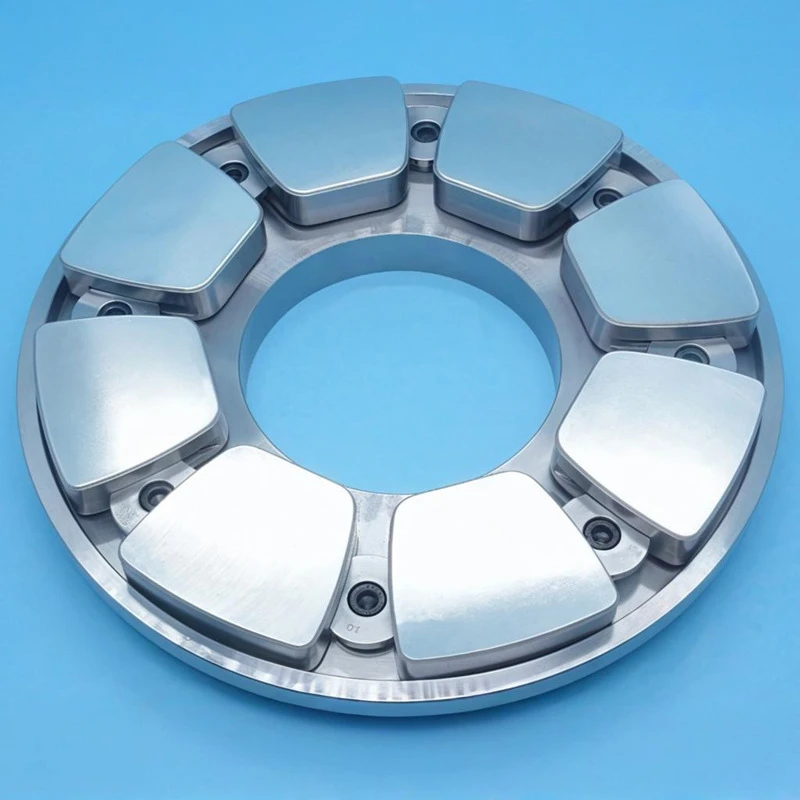
Fluid Film Thrust Bearings References
- Scientific design guidelines for labyrinth seal performance, American Society of Mechanical Engineers (ASME) PTC 10, 2021
- Effect of clearance and material on labyrinth seal leakage, Journal of Tribology, Vol. 142, No. 5, 2020
- Field performance analysis of flexible labyrinth seals in high-vibration applications, International Journal of Rotating Machinery, Vol. 27, 2021
- Impact of installation practices on labyrinth seal longevity, Plant Maintenance & Operations Magazine, Q3 2022
Wenzhou Zhengbang Bearing Co., Ltd.
We are one of the most professional labyrinth seals manufacturers and suppliers in China. With abundant experience, we warmly welcome you to buy customized labyrinth seals at competitive price from our factory. If you have any enquiry about free sample, please feel free to email us.
Address: Units 1-1 and 3-1, Building 12, Yongxing Nanyuan Small and Micro Enterprise Startup Park, Binhai 2nd Road, Yongxing Subdistrict, Longwan District, Wenzhou City, Zhejiang Province.
E-mail: zbbearing@zbbearing.com
WebSite: https://www.zb-bearings.com/
