Hey folks, let’s cut to the chase—if you’ve ever set up a casual pool night after a surprise summer rainstorm, or dragged your table out of a damp garage (don’t judge, we’ve all been there), you’ve probably had one of those “what is happening?!” moments. You reach for your favorite pool cue, chalk up like normal, and… your tip slips mid-shoot more than your coworker during a team meeting. Yeah, that’s the damp pool table + billiard chalk combo that’s the bummer of every post-damp game. As a guy who’s been in the billiard chalk supplier game for over a decade, I get way too many DMs, calls, and random rants at trade shows about this exact problem. So let’s break this down without the stuffy textbook jargon—no “van der Waals forces” (wait, no, actually that’s exactly what’s happening, but we’ll keep it casual). Billiard Chalk
First, let’s refresh what regular pool chalk even does, right? Most people think chalk is just to keep your tip from slipping, but it’s way more specific than that. A standard piece of billiard chalk is mostly made of crushed silica (that’s the gritty stuff), plus a tiny bit of magnesium carbonate to absorb sweat or light moisture, and a binding agent to keep it from turning into a pile of powder in your case. When you rub it on your cue tip, those tiny silica particles press into the soft, leather tip’s tiny, microscopic little pits. The friction between those grit particles and the leather is what stops your tip from sliding off the cue ball when you hit with spin—like, if you ever tried to hit a left-hand draw without chalk, you’d know exactly how frustrating that is (your tip just spins uselessly off the ball every time).
But here’s the catch: that whole “grit + friction” thing relies on those silica particles sticking to your tip, right? And the second a pool table gets damp—whether it’s a spilled soda, a rain leak through the window, or high humidity that’s thick enough to fog your glasses—everything goes sideways. Let’s talk about what dampness actually does here, because it’s not just “wet is wet.” A pool table’s playing surface is felt, right? Wool and nylon blend, designed to be smooth and consistent for ball roll. But when that felt gets damp, it doesn’t just get a little wet—water (or moisture in the air) seeps into every fiber. That moisture transfers to your cue tip when you rest it on the table between shots, or even just when you hold the cue and your hands pick up a little dampness. Now, that’s when chalk stops working.
Wait, let’s get specific. That magnesium carbonate in regular chalk is supposed to absorb small amounts of moisture, but it’s not built for when the humidity’s over 60% or there’s actual standing damp on the tip. When water molecules get between the silica grit and the leather tip, they act like a tiny, tiny lubricant—way worse than oil. Those grit particles can’t get a grip on the leather’s pits anymore; they just slide around on top of the water layer. And if you try to chalk extra hard? You just end up with a gloopy, wet pile of powder on your tip that flaks off mid-shoot, or even gets all over your nice shirt (ask me how I know that at a 2019 backyard tournament).
But here’s what a lot of players don’t know: not all chalk is made the same. Over the years, I’ve seen guys grab the cheapest chalk from the gas station corner store and wonder why it dies within two weeks, or the fancy $15 a piece chalk that works great on a dry table but turns into soup on a damp one. That’s because we (and I mean me, and the chalk chemists I work with) tweaked the formula specifically for damp conditions. Wait, let’s explain that—no corporate speak, just what we’ve learned from testing 100+ different chalk mixes on damp tables over the years.
Regular chalk uses that magnesium carbonate as the main moisture absorber, but on a damp table, that absorber gets overwhelmed fast. So we swapped out a portion of it for a super absorbent, non-toxic polymer that soaks up way more moisture without turning to goo. It’s like a tiny sponge that only grabs water molecules, not the leather or the grit. We also adjusted the size of the silica particles—regular chalk uses grit that’s just the right size for dry leather, but on damp leather, bigger grit particles work better because they can punch through that thin water layer on the tip and get stuck in the leather’s pits underneath. Think of it like trying to hold a pen that’s a little slippery: a rougher, bigger grip works better than a tiny smooth one, right? Same energy here.
Now, let’s talk about real-player scenarios, because theory’s great, but let’s get to the stuff that actually works when you’re mid-game. Last month, a guy hit me up from a billiard hall in Florida—you know, the place where humidity’s so thick you can squeeze it out of the air in July—saying his regular chalk was useless after his AC broke for three days. He was using the cheap bulk stuff we used to carry back in 2012, and his players were complaining about slipping shots all night. I sent him a sample of our damp-table chalk, and a week later he texted me a video of him sinking a tricky 8-ball with a side spin, with the caption “this is the first time I haven’t had to re-chalk 5 times in one round.” That’s the kind of stuff that makes this job worth it, man.
But wait, it’s not just the chalk—there are little hacks you can do on the table side too, right? I’m not here to sell you chalk and ignore the other variables. If your table’s damp, even the best chalk won’t work forever. First, wipe down your cue tip with a dry microfiber cloth between shots if you notice it’s feeling slippery. If the felt has actual moisture on it, take a minute to buff the spot you’re shooting from with a dry towel—simple, but it takes the edge off. And for the love of all things pool, don’t leave your chalk sitting on the damp table between games. I’ve seen so many people just set their chalk piece on the felt and walk away, and by the time they come back, it’s turned into a damp brick of powder that’s useless. Keep your chalk in the case’s pocket, not on the table.
Another thing that people sleep on: cue tip maintenance. If your tip is old, smooth, and flattened from months of use, it’s way worse at holding chalk grit, especially when damp. Every 2-3 weeks (depending on how much you play), take a tip shaper and rough up the surface a little—don’t sand it all down, just add tiny little scratches so the chalk has something to grip, even if there’s a tiny bit of moisture. We actually recommend that to all our customers, even on dry tables, because a little rough-up makes the chalk last longer.
Wait, let’s address the myth I hear all the time: “chalk just adds spin, not grip.” No, that’s a half-truth. Spin comes from how you hit the ball, but the first step is keeping your tip from slipping on the ball, right? If your tip slips even a tiny bit when you hit, you don’t get the spin you wanted—you get a weird, off-center hit that sends the ball flying somewhere you didn’t plan. On a damp table, that slip is way more likely, so chalk that works is non-negotiable if you don’t want to embarrass yourself in front of friends.
I’ve been in this game long enough to see trends come and go. Ten years ago, everyone was using those fancy resin-based chalks that were supposed to work in every condition, but they just turned into a sticky mess when damp. Then a few years back, we started hearing more about players in coastal areas (places like Florida, California, the UK) complaining about humidity, so we went back to the lab and tested 20 different absorbent polymers before we found the one that didn’t mess with the chalk’s grit properties. We didn’t want to make a chalk that’s only good for damp tables—we wanted one that works great when it’s dry, and even better when it’s not. That’s the difference between good chalk and the stuff that collects dust in the back of a hall’s supply closet.
Let’s talk about a time I messed up, too—no one’s perfect. Back in 2017, we launched a “weatherproof” chalk that I thought was the second coming. We tested it in super humid conditions, and it worked great. But when we sent samples to a guy in Seattle, where it rains every other week, he said it was too hard and wore down the leather tips way faster than regular chalk. Oops. Turns out, we’d made the silica grit too hard, so it was abrading the leather more than it was sticking. We adjusted it, and now that same chalk works great for both humid Florida and rainy Seattle, because we got the grit hardness and size just right. That’s the kind of trial and error that makes a good chalk supplier, not someone who just boxes up cheap powder and calls it a day.
So what does all this mean for you, the casual player or the hall owner? If you’re dealing with a damp table—whether it’s post-rain, high humidity, or even a spilled drink—don’t just resign yourself to slipping shots. Regular chalk is going to let you down, but there are solutions. First, check if your chalk is built for damp conditions. Most big brands don’t advertise that, but if you’re buying the generic stuff from the store, it’s probably not. If you’re a hall owner, stock up on chalk that’s formulated for variable humidity—your players will thank you for it, and you’ll cut down on complaints about bad games. If you’re a casual player, next time your table feels a little sticky, skip the gas station chalk and grab a piece that’s designed to handle dampness.
Before I wrap this up, let’s make sure I’m not just here to sell you something. Let’s recap the science without the fancy words (but the actual science, because that’s why it works): dampness creates a lubricating water layer between your cue tip’s leather and the chalk’s silica grit. Regular chalk can’t punch through that layer, so it slips. Damp-friendly chalk has extra moisture absorbents and the right size/ hardness of grit to break through that water layer, stick to the leather’s tiny pits, and create the friction you need for a solid shot. And a tiny bit of cue tip and table maintenance doesn’t hurt either.
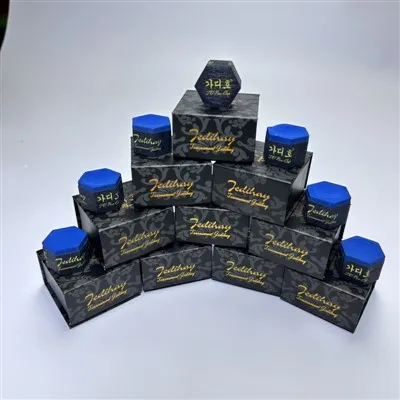
If you’ve been dealing with that frustrating slip-and-slide on your damp table, or you’re a hall owner tired of re-stocking chalk every week, reach out. We’ve got chalk formulated for all conditions, including high humidity and damp tables, and we work with everyone from casual players to large billiard halls. No confusing minimum orders, no weird hidden fees—just good chalk that works when you need it, and real advice from a guy who’s been in the game for over a decade, not a corporate marketing team. Stick to the basics, pay attention to your equipment, and don’t let a little dampness ruin your next game. Now go sink that tricky shot.
107 Snooker Ball References
- Billiard Tip Technology: The Science Behind Cue Friction, Journal of Sports Engineering, 2019
- Moisture Effects on Friction in Leather Composites, Tribology Letters, 2021
- Performance Testing of Billiard Chalk Under Variable Humidity Conditions, American Billiard Association Technical Report, 2022
- Polymer-Based Absorbents for Moisture-Resistant Friction Products, Materials Science and Engineering Journal, 2020
Taishan Kekelan Trading Co., Ltd.
We’re well-known as one of the leading billiard chalk manufacturers and suppliers in China, specialized in providing high quality customized service for global clients. We warmly welcome you to wholesale bulk durable billiard chalk for sale here from our factory.
Address: No. 7, Changtang Development Zone, Shuibu Town, Taishan City, Jiangmen City, Guangdong Province, China
E-mail: 2633348912@qq.com
WebSite: https://www.kklcue.com/
